Echo
A digital legacy house. Family members get rooms you walk into for face-to-face talks with video personas that remember your stories.

Echo is an interactive living digital legacy application designed to preserve the voice, personality, stories and presence of loved ones in a private, family-controlled environment.
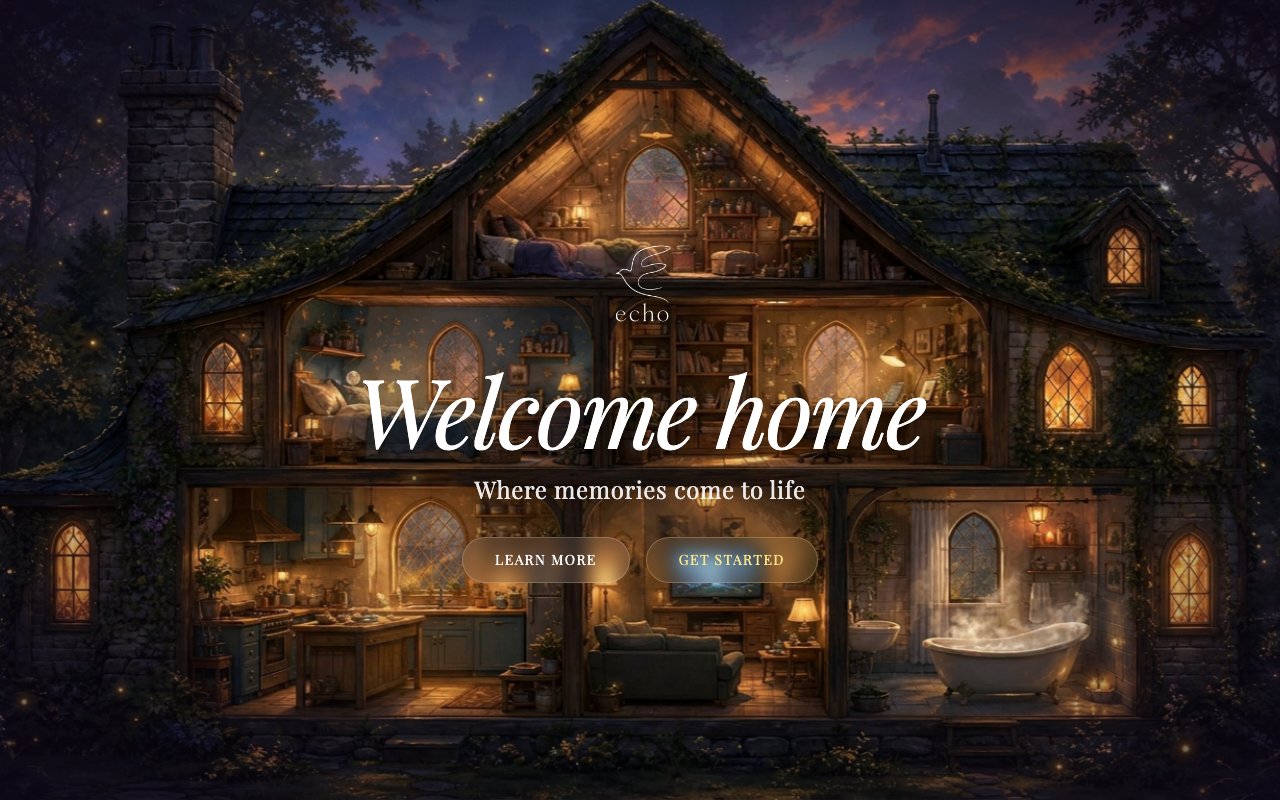
The home is a memory cottage: each family member gets a room, and you walk in for a face-to-face conversation with a video persona powered by Tavus CVI. Onboarding walks a family through naming their house, adding members, assigning rooms, sending invites and picking a character.
Built with Lovable and Supabase; showcased in the Tavus community gallery.
3 Reviews
Log in to leave a review.
The premise deserves scrutiny, so I gave it some. Echo gets the structure right: families control the space, access runs through invites, and nothing is public by default. The house metaphor does quiet privacy work too, since a room with a door reads differently from a feed with an algorithm. Before I trust it with a voice that can no longer consent, I want answers on hosting, on what Tavus retains, on whether a family can export everything and delete a persona outright, and on what happens to the rooms if the company folds. Most legacy-tech products never answer these questions. Echo's family-controlled language is a start rather than an answer, and I would like a plain-language data page written for a grieving non-technical relative before I recommend it beyond an experiment. The craft is real; the landing page alone shows more care than most funded startups manage. Trust, though, is the entire product in this category.
I set up a room for my grandfather with my mum over a weekend. Hearing his stories told back in a warm space we arranged ourselves felt gentle rather than strange, which surprised me. Onboarding took twenty minutes including the family invites. My mum asked one question: do the recordings stay ours. The private, family-controlled answer mattered to her more than any feature.
I sit with families in the last weeks of a person's life, and the question that follows me home is what remains afterwards. Echo gives that question a shape I had not seen before: a house. Each person gets a room, and you walk in to talk rather than scrolling a feed of photos. The cottage illustration sets a tone of warmth instead of the sterile grief-tech aesthetic I have grown wary of. The video conversations carry more presence than I expected, and the onboarding treats the subject with care, down to assigning rooms as a family rather than as one administrator. I will say what I tell every family considering tools like this: a video persona is a vessel for memory, and it can comfort or it can keep a wound open, depending on the person. Echo's family-controlled, private-by-design framing suggests the builders understand that weight. I would welcome guidance in the app itself about healthy patterns of use. This is tender ground, and this team walks it with more grace than most.